For the world’s rivers 2025 was one of the driest years in more than three decades. UNEP sets out what drought is doing to households and ecosystems, and the adaptation measures – from Sri Lankan tank cascades to zai pits in Niger – that reduce the risk.
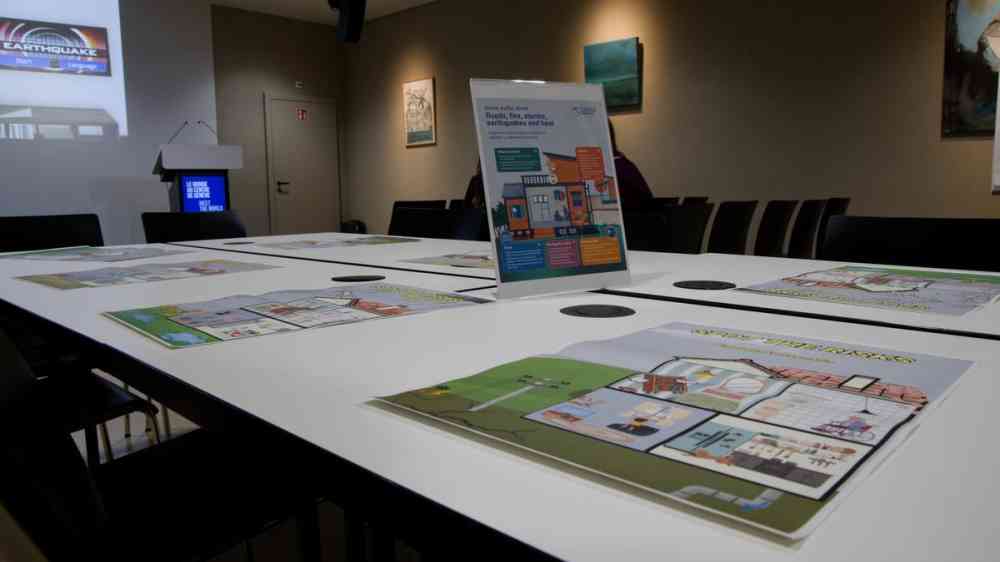
On this year’s International Day for Disaster Risk Reduction, UNDRR, UNESCO and IFRC explored how reliable information, resilient media and local knowledge help communities understand risks and prepare for disasters.
United Nations Educational, Scientific and Cultural Organization (UNESCO)
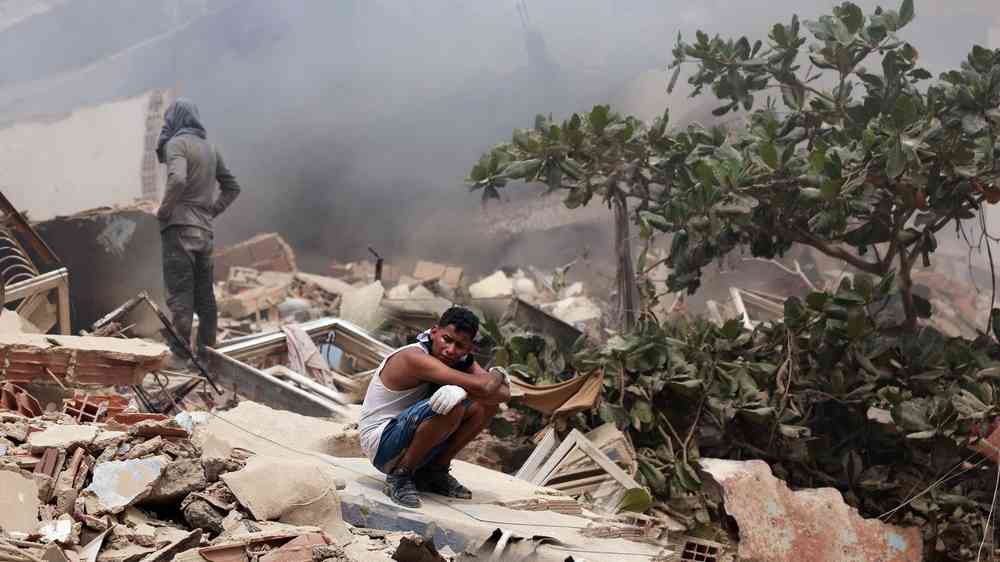
The Global Earthquake Model Foundation's 2026 global seismic risk assessment reports unreinforced masonry and earthen construction account for more than half of the buildings estimated to be destroyed by earthquake shaking in an average year worldwide
Kampala Capital City Authority (KCCA) has urged homeowners, landlords and developers to prioritise safety in construction, warning that buildings erected without approved plans, quality materials and qualified professionals can turn homes into death traps
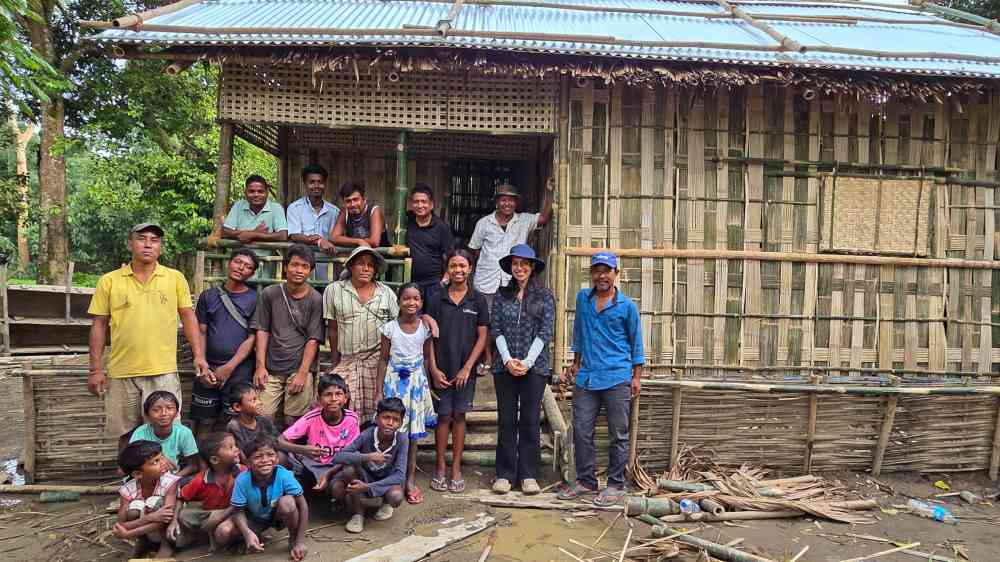
Marking the International Day for Disaster Risk Reduction, the UN chief stressed that “as climate and disaster risks multiply, building safer dwellings is the shared responsibility of governments, developers, engineers and communities”.
This blog resilience means having more choices when risks arise. Strengthening livelihoods, empowering women and protecting ecosystems helps households build financial security, manage uncertainty and adapt to changing circumstances.
For this year’s International Day for Disaster Risk Reduction, UNDP describes how risk-informed housing and land-use planning is taking shape in Cuba, Jamaica and Venezuela, in a region where 81.2 per cent of the population lives in cities.
The 2026 IDDRR aims to raise global awareness of the centrality of the home in disaster risk reduction, advocate for stronger governance and investment in resilient housing.
United Nations Office for Disaster Risk Reduction (UNDRR)
The theme for the 2025 International Day for Disaster Risk Reduction is "Fund Resilience, Not Disasters". This theme highlights the need to address the escalating costs of disasters by shifting focus from reactive response to proactive investments in DRR.
United Nations Office for Disaster Risk Reduction (UNDRR)
This is a conference report of the Fifth World Tsunami Museum Conference (WTMC5) which was held on 14 October 2024 during the Asia-Pacific Ministerial Conference on Disaster Risk Reduction (APMCDRR 2024) in the Philippines.
United Nations Office for Disaster Risk Reduction (UNDRR)
United Nations Office for Disaster Risk Reduction - Regional Office for Asia and Pacific
United Nations Office for Disaster Risk Reduction - Kobe Office
The Global Assessment Report 2025: Resilience Pays: Financing and Investing for our Future highlights how smarter investment can reset the destructive cycle of disasters, debt, uninsurability and humanitarian need that threatens a climate-changed world.
United Nations Office for Disaster Risk Reduction (UNDRR)
This policy brief highlights priority areas for actionable advances in improving food security, nutrition and child health in Burkina Faso in the context of a changing climate.
London School of Economics and Political Science, the
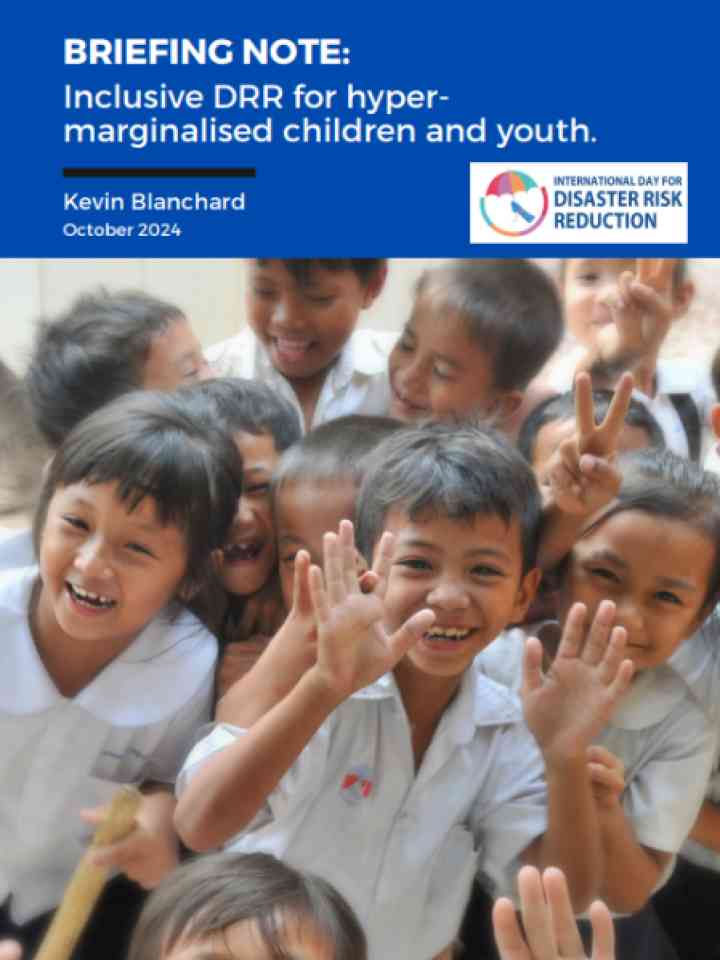
This briefing note highlights the need to ensure that disaster risk reduction policies are inclusive of hyper-marginalised children and youth, not just a moral imperative but a strategic necessity for building truly resilient societies.
Education is a key asset for climate action. Education reshapes behaviors, develops skills, and spurs innovation. This report outlines data, evidence, examples, and a policy agenda on how to harness education and learning to propel climate action.
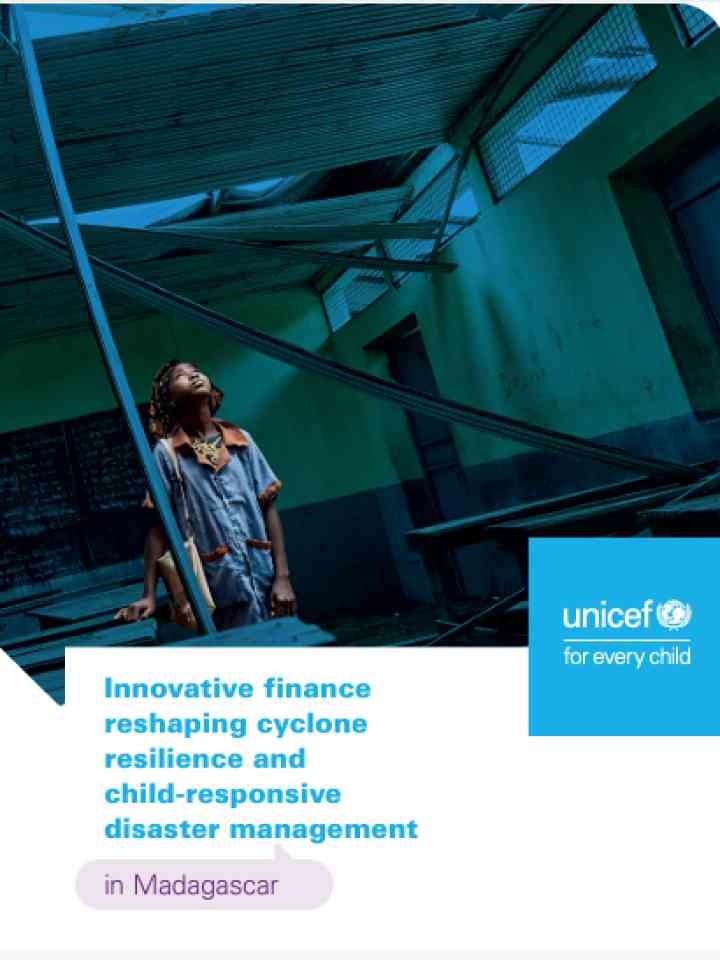
This case study shows how UNICEF, the Government of Madagascar and civil society are working together to pilot a ground-breaking, innovative finance solution that includes a child-responsive, parametric risk transfer product for tropical cyclones.