
Resilience starts at home but is built together: Lessons from Québec
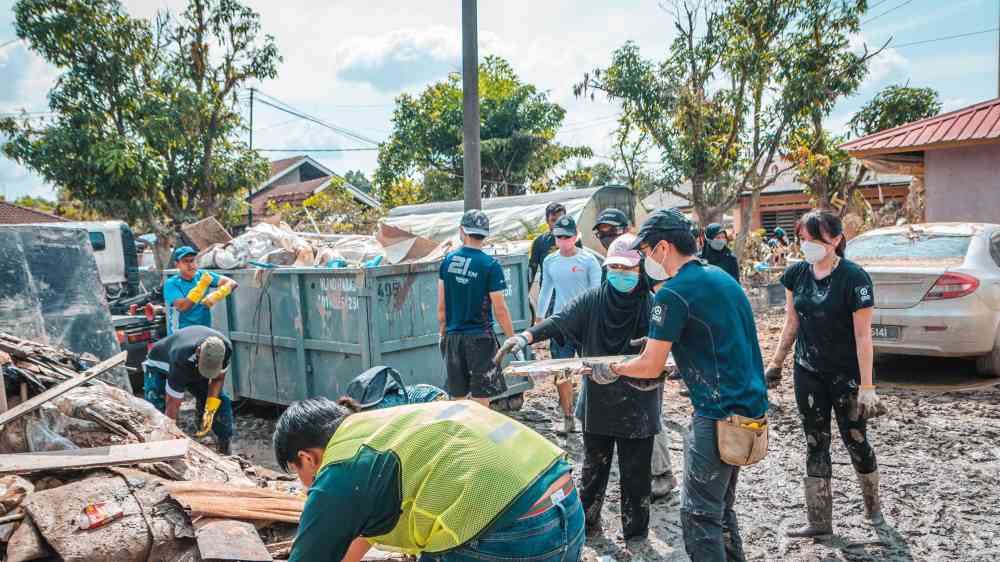
As risks evolve over time and interdependencies between social, environmental, and technical systems become increasingly complex, disaster preparedness presents challenges that extend well beyond emergency response arrangements. The ability to cope with disruptive events depends not only on emergency plans, protective infrastructure, and response services, but also on the capacities developed within homes, neighborhoods, and everyday practices.
Against this backdrop, the 2026 International Day for Disaster Risk Reduction theme, “Resilience starts at home” offers an opportunity to reconsider the relationship between individual preparedness and collective resilience. While the household represents an important starting point, its capacity to prepare for and cope with disasters is also shaped by social relationships, knowledge, and institutional support.
Over five years of research in Québec’s civil protection system, I interviewed professionals about how people prepare for disasters. Three perspectives stood out: (1) making individual preparedness more accessible; (2) strengthening neighborhood solidarity; and (3) transmitting a culture of preparedness through education.
The interview excerpts are translated from French. The views are illustrative, not representative of all participants. Together, these perspectives invite a broader reflection on how resilience begins at home while taking shape through the relationships connecting households, communities, and institutions.
Preparing at home: Starting with what is within reach
At the household level, preparedness is frequently associated with the traditional 72-hour emergency kit. Although widely promoted as a practical tool, this recommendation does not necessarily translate into action.
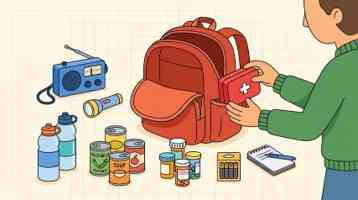
Interviewees said that recommendations may appear abstract, demanding or intimidating when they are presented as a complete set of requirements rather than a gradual process:
“The emergency kit is a vague concept for ordinary people… If you open your pantry, you might realize that you are much better prepared than you thought.” - Participant 18, Municipal Civil Security Practitioner, 2026
This observation highlights a distinction between knowing what should be done and feeling able to do it.
A more accessible starting point would therefore be to encourage households to recognize existing resources and identify opportunities for gradual improvement. Checking drinking water supplies, reviewing available food, or preparing a list of emergency contacts are relatively modest actions that can make preparedness more tangible. Rather than treating readiness as a condition to be achieved all at once, this approach presents it as a capacity that can develop incrementally.
Such an approach must nevertheless acknowledge that households do not have equal resources, living conditions, or capacities to prepare. Encouraging small steps should complement, rather than replace, the support needed by people facing greater constraints.
Yet even well-prepared households remain embedded in a wider social environment, where relationships with others can become equally important.
Beyond the doorstep: Neighborhoods as communities of solidarity
This connection between individual capacities and their social environment introduces a second dimension highlighted by the interview material: the importance of neighborhood relationships.
This challenges an exclusively individual understanding of preparedness: resilience depends not only on what households possess, but also on the relationships they can rely on when facing disruption.
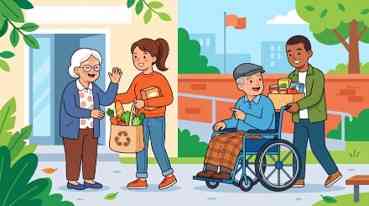
“Knocking on your neighbour's door saves far more lives than an emergency kit! Citizens are a resource, not a burden.” -Participant 20, Municipal Civil Security Coordinator
This statement is particularly illustrative of a broader shift in perspective: citizens are not merely people to be protected; they can also contribute to the resilience of their communities.
Disasters rarely affect everyone in the same way. Some people may have access to information, transportation, supplies, or support networks, while others may experience isolation or additional constraints.
Checking on an isolated neighbour, sharing reliable information, or offering assistance are examples of how individual capacities can become collective resources.
These reflections resonate with research on social capital and community resilience, which highlights the importance of social relationships in disaster contexts. They also connect with broader discussions of collaborative governance, where coordination and collective action depend on relationships among interdependent actors.
However, communities cannot compensate for every limitation in institutional preparedness. Informal support networks are unevenly distributed, and their capacities vary considerably. Their contribution is therefore best understood as complementary to the responsibilities and resources of civil protection organizations.
This raises a further question: if preparedness and solidarity depend partly on knowledge, habits, and social relationships, how can these capacities be encouraged before a disaster occurs? A third dimension identified in the interview material points toward education as one possible avenue.
From school to home: Passing on a culture of preparedness
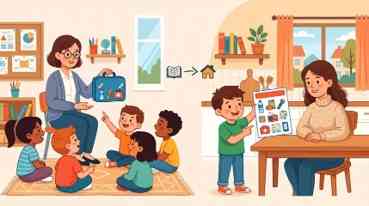
Where household preparedness emphasizes practical actions and neighborhood solidarity highlights mutual assistance, education introduces another dimension: the gradual development and transmission of knowledge.
Among the perspectives highlighted in the interviews is the potential value of integrating civil protection education into school curricula. The comparison with environmental education is particularly illustrative: just as children may bring home lessons about recycling or other environmentally responsible practices, they could potentially contribute to conversations about hazards, protective behaviors, and preparedness within their families.
“There is nothing better than educating children at school, because they bring that knowledge home. That is how we managed to introduce […] good practices: it is your child who reminds you about them every day.” (Participant 22, Municipal Emergency Management Practitioner).
What if children could also become ambassadors for disaster preparedness?
Learning to recognize local hazards, identify appropriate protective actions, or understand the importance of mutual assistance could provide opportunities for children to discuss preparedness with family members.
However, educational activities cannot be assumed to produce changes in household behaviour, nor should children be made responsible for ensuring family preparedness. Rather, this perspective identifies a possible pathway through which knowledge and awareness could circulate between educational institutions, households, and communities.
Resilience takes an ecosystem
This interdependence of the three identified dimensions is particularly relevant when considering the challenges posed by complex, uncertain, and ambiguous risks, whose governance requires approaches adapted to the characteristics of the risks involved. In such contexts, the diversity of actors, knowledge, and responsibilities makes collaboration an important dimension of collective risk management. Research on interdisciplinary collaboration in volatile, uncertain, complex, and ambiguous (VUCA) environments further highlights the challenges of connecting different forms of expertise and developing shared understandings across organizational and disciplinary boundaries.
Promoting individual responsibility, while important, is not sufficient in itself. Citizens' ability to prepare also depends on the information they receive, the relationships they maintain, and the support provided by public institutions and community organizations.
The perspectives discussed here do not establish which preparedness measures are most effective. Rather, they invite consideration of how practical action, social relationships, and knowledge transmission may complement one another within a wider approach to disaster risk reduction.
In short: resilience starts at home, but it takes an entire ecosystem to build it.
Valérie Vermeulen, PhD, is an interdisciplinary researcher specializing in disaster risk governance, civil protection, and community resilience. With a background in psychology, criminology, and environmental sciences, she explores how organizations and communities navigate complexity, uncertainty, and collective decision-making. She is a postdoctoral researcher at the Université du Québec à Rimouski (UQAR), an affiliated researcher with the Canadian Observatory on Crises and Humanitarian Action (OCCAH), and an associate researcher with Égide at the Université du Québec à Montréal (UQAM). Her work bridges scientific research and practice to strengthen disaster preparedness, collaboration, and resilience.
Declaration on AI-generated illustrations: The three illustrations accompanying this article were generated using artificial intelligence for illustrative purposes.