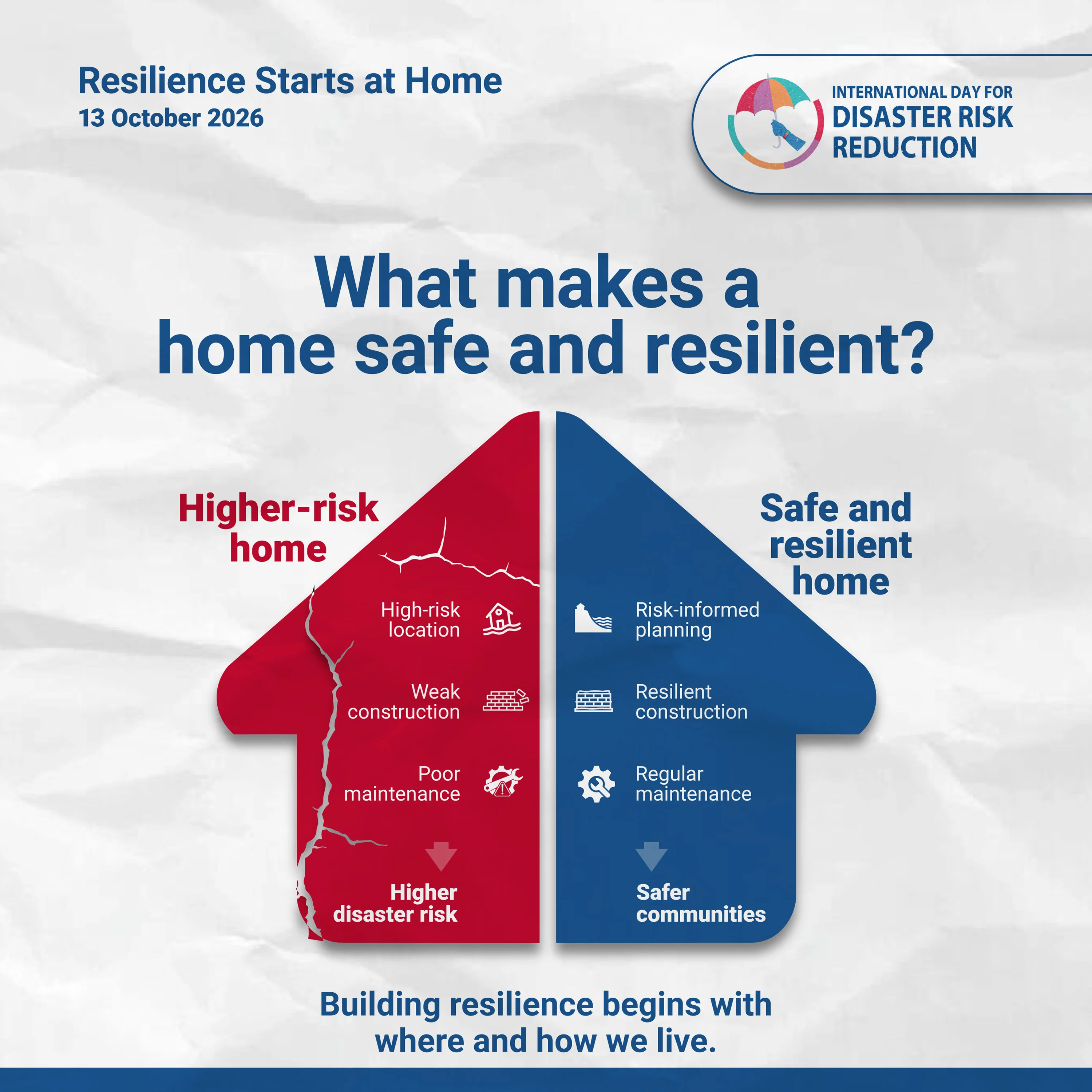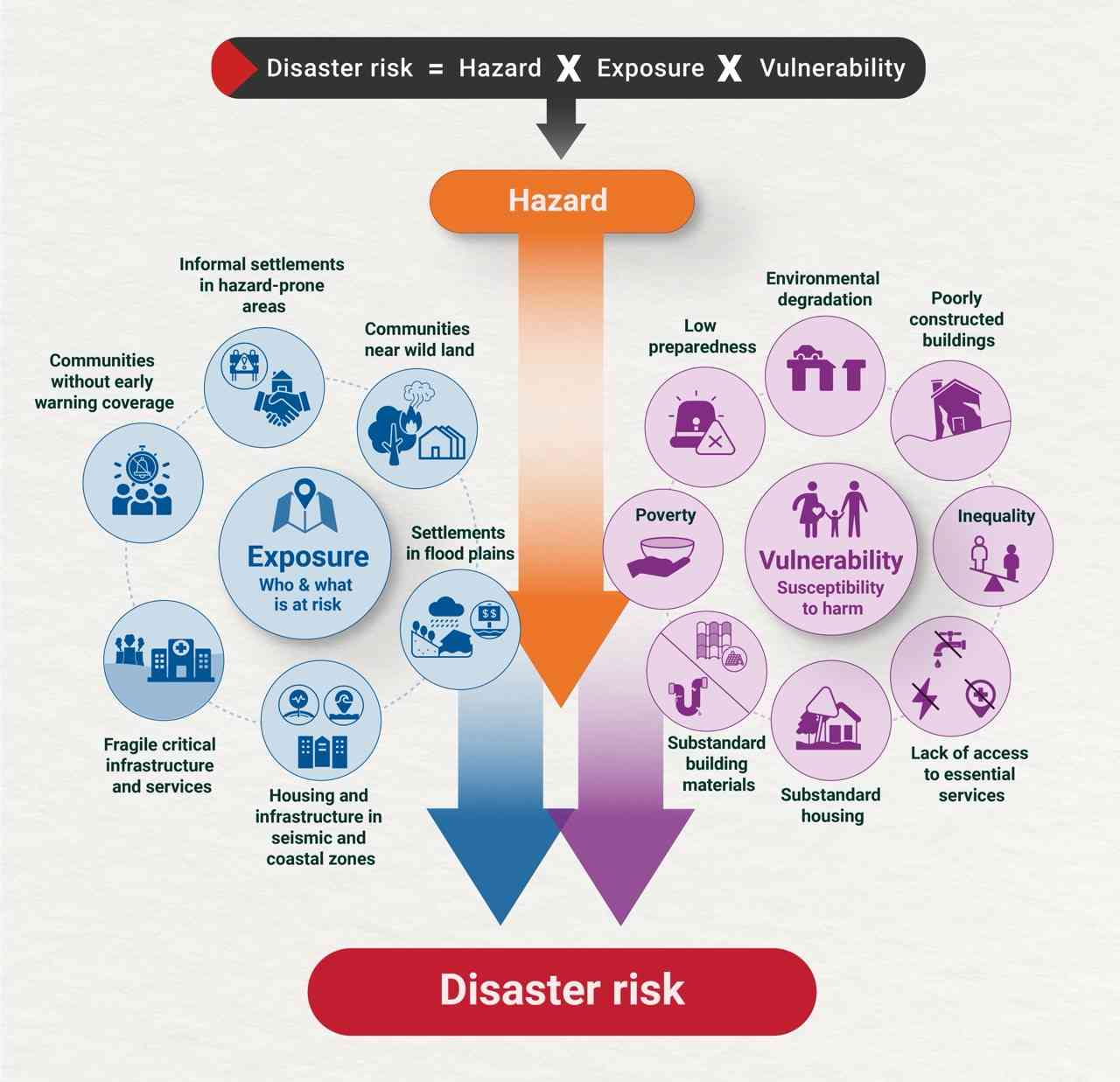
Homes are where people live, sleep, and care for one another, and seek shelter and security. For many, they are central to wellbeing and stability. However, the ways homes are planned, built, financed and maintained determine whether risk is reduced or created.
When houses are located in high-risk areas, built without disaster-resilient designs, or inadequately maintained to withstand growing hazards, homes become sites of vulnerability, contributing to loss of lives, displacement and economic losses. These risks often have differentiated impacts on women, children, older persons, persons with disabilities, low-income households and gender-diverse groups, particularly where inequalities in housing, land tenure, access to resources, mobility, caregiving responsibilities and decision-making persist.
The Midterm Review of the implementation of the Sendai Framework found persistent challenges in enforcing risk-sensitive land-use and building regulations, and in effectively involving communities and households in disaster risk reduction decision-making. It highlighted that many countries still lack adequate mechanisms to ensure resilient construction in hazard-prone areas. People living in informal settlements often remain underserved by planning processes, risk reduction measures and building regulation, with marginalized groups frequently facing additional challenges to secure housing, access to services, and participation in local decision-making.
Whether homes are resilient depends on the combined actions of governments, local authorities, the private sector, and households. States bear the primary responsibility to reduce disaster risk, but real estate developers, construction companies, financiers, and insurers also shape exposure and vulnerability through decisions on where and how houses are built, the materials and standards used, and the availability of risk-informed financing and insurance products. Strengthening accountability and incentives across these actors is essential to ensure housing resilience, including through inclusive and risk-informed housing policies, accessible and affordable financing and insurance mechanisms, universal design principles, and meaningful participation of women, persons with disabilities and local communities in housing and urban planning processes.
The Sendai Framework for Disaster Risk Reduction 2015-2030 establishes disaster risk reduction as a people-centred endeavour, emphasising that policies, systems, and investments must be designed around the needs and capacities of individuals and communities, recognising that disaster risks and impacts are not experienced equally across populations.
Nowhere is this principle more relevant than at home – the most personal and fundamental environment in people's lives.
Theme for 2026
To ensure homes remain safe for everyone, the United Nations Office for Disaster Risk Reduction has selected "Resilience Starts at Home" as the theme for the 2026 International Day for Disaster Risk Reduction (IDDRR), observed on 13 October.
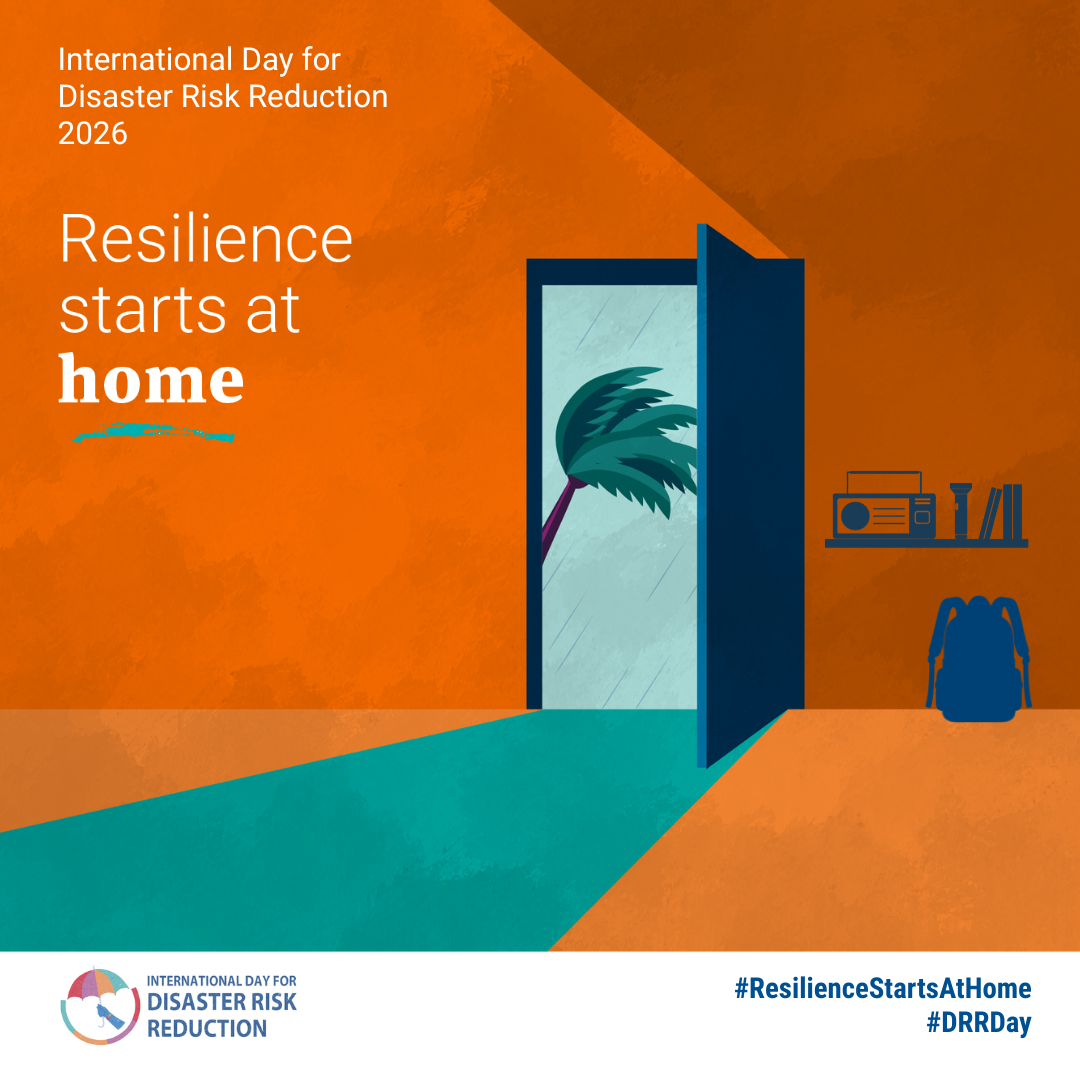
This theme recognises that the home is both the primary site where disaster impacts are felt and the frontline of resilience-building. It calls on all actors: governments, the private sector, civil society, organizations of persons with disabilities, women's groups, youth networks, diverse community leaders and households themselves, to take concrete actions to reduce disaster risk, where it matters most.
At the household level, people have a clear stake in their own safety and must be empowered to take action to protect themselves. However, the ability to act is often shaped by unequal access to information, resources, land tenure, finance, social protection and decision-making power within households and communities. When households are able to access and understand the risks they face, respond effectively to early warnings, make informed housing decisions, and engage in local planning processes, they become active agents of resilience.
Global advances in early warning systems, driven by the Early Warnings for All initiative, mean that more people are receiving hazard alerts than ever before, yet early warnings are only effective when they reach all members of a household in accessible and understandable formats, when people understand how vulnerable their homes are to specific hazards, and when they know what protective actions to take. Bridging the gap between receiving a warning and taking appropriate action at the household level - including through accessible risk communication, inclusive evacuation planning, and recognition of the disproportionate caregiving responsibilities often carried by women during disasters - remains a critical challenge that this theme seeks to address.
The theme aligns with the thirteenth session of the World Urban Forum (WUF13) in 2026, organized by UN-Habitat and the Government of Azerbaijan, under the theme "Housing the world: Safe and resilient cities and communities." It also aligns with the New Urban Agenda's commitment to adequate, safe, and affordable housing, and with Sustainable Development Goal 11 (Make cities and human settlements inclusive, safe, resilient, and sustainable).
Building resilience at home also requires recognizing and strengthening the leadership, knowledge and contributions of women and local communities in reducing disaster risk and protecting households.
Objectives
The 2026 IDDRR aims to raise global awareness of the centrality of the home in disaster risk reduction, advocate for stronger governance and investment in resilient housing, elevate the role of the private sector in reducing housing-related risk, and empower households, particularly those facing heightened vulnerability, to take risk-informed action to protect themselves and strengthen community resilience.
Resilience at home is not a luxury – it is a right, a responsibility, and an investment.
Calls to Action
Disaster risk reduction is a shared responsibility. For this reason, the 2026 International Day for Disaster Risk Reduction has calls to action for three key audiences:
- Governments
Governments
Governments must protect people in their homes through developing and enforcing risk-informed land-use planning and resilient construction practices, increasing public investment in housing resilience, particularly for the most vulnerable populations, and ensuring that accessible, localised risk information reaches every community.
Specifically, governments must:
- Adopt global standards and approaches, such as the Principles for Resilient Infrastructure, that integrate inclusive resilience into infrastructure planning and housing systems.
- Develop and enforce disaster-resilient building codes, including universal accessibility and inclusive design standards.
- Ensure land-use planning is risk-informed and responsive to the differentiated needs and vulnerabilities of diverse population groups.
- Expand inclusive multi-hazard early warning systems that are people-centred, gender-responsive and accessible to all.
- Provide communities with accessible, local-level risk information through inclusive communication approaches that reach all groups, including those most at risk of exclusion.
- Expand access to affordable and prevention-focused home insurance, especially for low-income households and groups facing heightened vulnerability.
- Engage and empower households and communities, including women's groups, OPDs, youth and local leaders, in DRR planning and decision-making.
- Strengthen coordination among public authorities, the private sector, civil society and local communities.
- Combine traditional building practices with modern engineering standards to ensure culturally relevant, affordable and disaster-resilient housing that is also accessible and inclusive.
- Strengthen local capacity by training masons and artisans, including women and youth, in disaster-resilient construction techniques and inclusive design.
- The private sector
The private sector
The private sector must prioritise long-term resilience over short-term expediency. This means complying with zoning laws and building codes, conducting and disclosing disaster and climate risk assessments, investing in resilient design and construction practices, and supporting the development of accessible financial instruments that enable risk mitigation and transfer for households. The private sector should align its practices with the UNDRR Private Sector Alliance for Disaster Resilient Societies (ARISE) guiding principles of resilient socio-economic development, working in public-private partnership, addressing climate and disaster risk coherently, demonstrating the added-value of risk reduction, and operating under good governance aligned with UN values, human rights and dignity for all.
Specifically, private sector actors should:
- Prioritise long-term disaster resilience over short-term expediency while promoting inclusive and equitable access to safe housing and resilient infrastructure.
- Comply with zoning laws and building codes to protect lives and assets, including accessibility and inclusive design standards.
- Disclose known climate and disaster risks to home buyers and renters in accessible and understandable formats.
- Help governments and households finance risk mitigation and risk transfer, including access to affordable insurance and financial products accessible to underserved populations.
- Adopt and support resilient construction and inclusive infrastructure standards.
- Support small businesses, including women-led and community-based enterprises, to develop business continuity and risk reduction plans.
- Households
Households
Households should seek to understand the hazards and vulnerabilities they face, act promptly on early warnings, make informed decisions when buying, renting or improving their homes, and participate, where possible, in local resilience and disaster risk reduction efforts. Strengthening resilience also requires addressing barriers to information, resources, finance, mobility and decision-making that disproportionately affect those already facing heightened vulnerability. Community solidarity and mutual support, especially for those who may need additional assistance during emergencies - are essential dimensions of household-level resilience.
Specifically, households can:
- Seek information on local hazards, risks and vulnerabilities from official or other credible sources, and ensure that risk information is accessible and shared among all household members.
- Become familiar with early warning systems in their area - specifically, the types of alerts issued and the appropriate protective actions to take, including how to support household members who may face additional challenges during emergencies.
- Buy home or renters' insurance where available and affordable, and explore public or community-based assistance programs if needed, including social protection or community-based support mechanisms.
- Take steps to improve household preparedness, such as maintaining emergency supplies and developing family emergency plans, participate in local DRR planning, awareness activities, and community preparedness initiatives, including those supported by city-led resilience efforts such as Making Cities Resilient 2030 (MCR2030), to the extent possible, strengthening inclusive leadership and participation.
- Advocate locally for accessible, inclusive and risk-informed housing, infrastructure and preparedness systems.
Resilience in Practice: Country and Local Examples
To illustrate the transformative potential of these calls to action, the following are just some of the many examples from across regions where governments, the private sector, communities and households are making homes safer and more resilient.
In Colombia, Bogotá is using artificial intelligence, mobile mapping and aerial imagery to identify homes and neighbourhoods most vulnerable to hazards before disasters occur. Street-level data from vehicle-mounted cameras combined with drone imagery enables machine learning algorithms to detect structural risks, such as earthquake-prone "soft-story" construction, and generating neighbourhood inventories to guide targeted upgrades and retrofitting. The initiative makes vulnerability visible for planning and investment, enabling faster identification of unsafe housing so that limited resources can be allocated more effectively.
In the Philippines, the experience of Iloilo City shows how housing in informal settlements can become a foundation for climate resilience when disaster risk reduction is integrated with community-led planning. While early government responses to repeated flooding focused on land clearance, often resulting in forced evictions - a shift emerged towards a participatory model led by the Homeless People's Federation of the Philippines and supported by local government. Through community surveys, savings schemes and locally managed projects, more than 1,250 households have moved to safer homes closer to jobs and services while maintaining social networks, demonstrating how co-designed housing policy can reduce flood risk without displacement.
In West Africa, Association la Voûte Nubienne (AVN) has helped build more than 7,000 affordable, climate-adapted Nubian Vault homes across six countries using a 3,000-year-old earthen construction technique. The structures maintain indoor temperatures around 7°C cooler than metal-roofed homes, reducing the need for timber and energy-intensive cooling. AVN is now exploring how carbon emissions avoided by each house could generate certified carbon credits, creating a financial mechanism to subsidize future construction for low-income families and enable large-scale expansion across the Sahel.
In Australia, following severe flooding in 2022 which damaged hundreds of homes in high-risk floodplains, the Queensland Government introduced the Voluntary Home Buyback Program funded through an AUD 741 million (US$530 million) Resilient Homes Fund. The scheme allows homeowners in the most exposed areas to sell their properties at pre-flood valuations, after which land is rezoned as non-habitable to prevent future development. Alongside support for retrofitting and house-raising, the buyback approach marks a shift from repeatedly repairing damaged housing towards planned retreat - offering a model replicable in other flood-prone regions.
In Saudi Arabia, Al Madinah has demonstrated how resilience can be integrated into urban planning, governance and public investment. By embedding disaster and climate resilience into municipal planning, strengthening institutional coordination, and using resilience assessments to guide decision-making, the city is building a safer and more sustainable urban environment. Al Madinah's experience illustrates how local leadership and long-term planning can strengthen the resilience of homes, infrastructure and communities while supporting sustainable urban development.
In Austria, Vienna is leveraging its large social housing system as a tool for climate adaptation. With roughly half the city's residents in city-owned or subsidized housing, Vienna can retrofit and design buildings at scale with climate-resilient features, including insulation against temperature extremes, rooftop solar, green roofs and "sponge city" elements such as permeable surfaces and water retention areas that reduce flood risk. Combined with a plan to phase out fossil fuels in buildings by 2040, the city is turning its housing stock into central infrastructure for both mitigation and adaptation - an approach increasingly influencing other cities seeking to link affordable housing with climate resilience.
Key messages
The following messages are designed for use in speeches, press releases, op-eds, social media and partner communications:
- No one should have to choose between an affordable home and a safe one.
- Every person deserves a home that can withstand the hazards around it.
- Disasters don't just destroy buildings: they destroy lives, livelihoods, and futures. Resilience starts with where and how we live.
- A warning that doesn't reach the household, isn't understood, or isn't acted on is a warning that fails.
- The cost of building resilience into homes is a fraction of the cost of rebuilding after disaster.
- Resilience at home is not a luxury – it is a right, a responsibility, and an investment.
- When households are informed, prepared, and included in planning, entire communities become stronger.
- Women's leadership and community participation are essential to resilient homes and communities.
- Resilient housing must be accessible, affordable and safe for everyone.
- Inclusion saves lives: resilience is strongest when everyone is part of planning and decision-making.
Celebrate International Day for Disaster Risk Reduction 2026
Participate in an event, promote one, or join the conversation on esilience starts at home. Many events will be organized around the world to commemorate the International Day for Disaster Risk Reduction Day on 13 October.
Send us your activities so that we can amplify your events. We would be delighted to know more about how you are going to commemorate the Day. Find out more about organizing your own #DRRday #ResilienceStartsAtHome
Upcoming events
Past events
Share your event
UNDRR welcomes events from the community and partners.
Resources
- Masterclass on "Readiness for recovery and reconstruction of resilient housing and critical infrastructure."
- Global Assessment Report 2025: Resilience Pays: Financing and Investing for our Future.
- Words into Action "Implementation guide for land use and urban planning."
- Enhance infrastructure resilience | UNDRR.
- ARISE Private Sector Alliance for Disaster Resilient Societies tool library.
- Sendai Gender Action Plan.

Social media cards