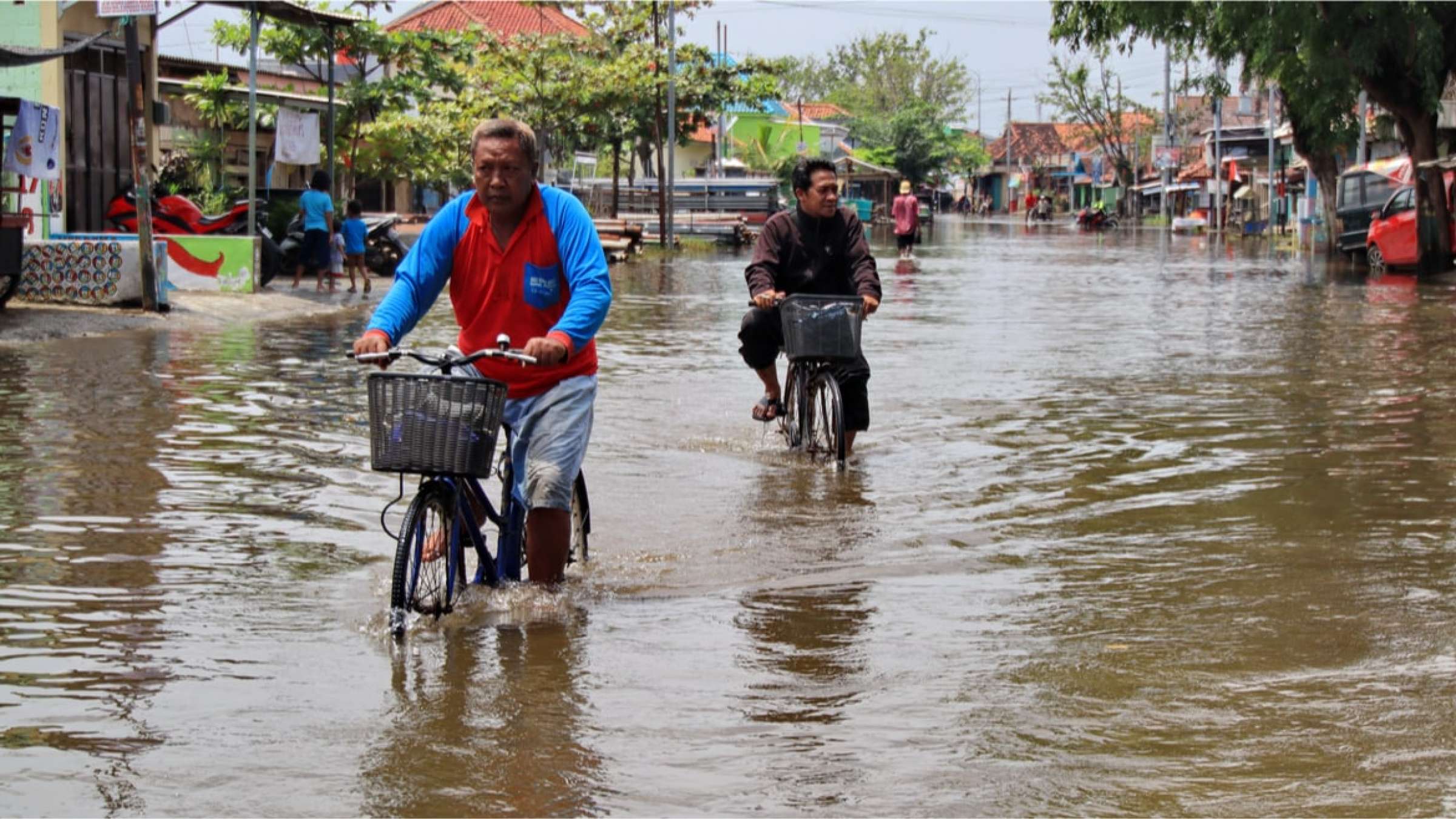
Cyclists driving through flooded streets in Pekalongan, Indonesia (2021)
New CDP data shows 4/5 cities (80%) facing significant climate hazards, from extreme heat to floods, in 2022.
Carbon Disclosure Project
CREWS
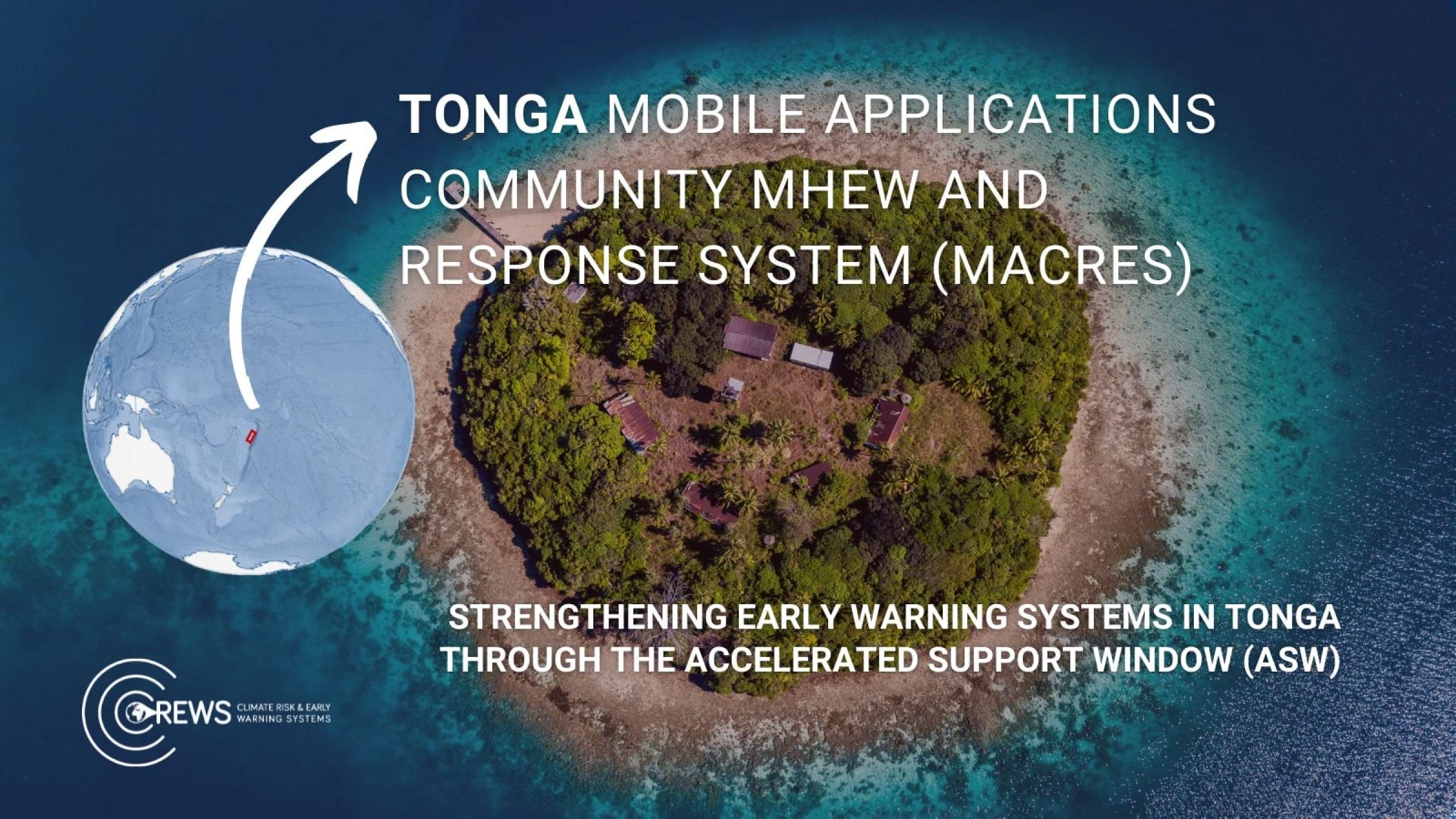
In response to the unprecedented volcano and tsunami, Kingdom of Tonga develops Tonga Mobile Applications Community MHEW and Response System (MACRES) through the CREWS Accelerated Support Window.
Glossary of early action terms: 2022 edition
2022
In an attempt to clarify key terms, and in keeping with its aim to bring coherence, alignment, and complementarity to the field of risk-informed early action, REAP has developed this glossary as a tool to support productive conversations around the topic.
Risk-informed Early Action Partnership

Ronald Jackson - UNDP Sára Csapó - UNDP
What if early warning systems are used to trigger the allocation of resources for social protection measures in times of crisis?
Tsunami Hazard Zone warning sign on the Pacific Ocean coast warn the public about possible danger after an earthquake. Blurred blue ocean surface on horizon
The call for ‘Early Warning for All’ is critical in Asia and the Pacific, the world’s most disaster-prone region. Between 1970 and 2020, disasters in the region affected 6.9 billion people and killed more than 2 million.
United Nations Economic and Social Commission for Asia and the Pacific
The primary goal of disaster risk reduction is prevention. But when that is not possible, then it is important to minimize the harm to people, assets and livelihoods through early warning systems.
To ensure access to early action for all, more needs to be done to scale up the approach, in particular by involving the private sector.