IDDRR Logo
IDDRR - Main navigation
  • Learn
  • Act
  • Share on social
  •  Search
Menu
Author(s) Kevin Blanchard

Inclusive DRR for hyper-marginalised children and youth

Source
DRR Dynamics Ltd

All children and young people need to be considered disaster risk reduction policy and it’s right that children and youth all feature so prominently within the Sendai Framework, Sustainable Development Goals and Paris Climate Agreements. However, within this broader section of our society, vulnerability and risk aren't equally distributed. Research on disaster preparedness, response, and resilience highlights a critical gap in addressing the needs of hyper-marginalised groups, particularly children and youth within those groups.

This briefing note highlights that ensuring disaster risk reduction (DRR) policies are inclusive of hyper-marginalised children and youth is not just a moral imperative but a strategic necessity for building truly resilient societies. By addressing the specific vulnerabilities of groups such as unhoused youth, LGBTQIA+ youth, and child labourers, and by incorporating intersectional approaches, policymakers can move beyond one-size-fits all solutions to foster a DRR framework that leaves no one behind.
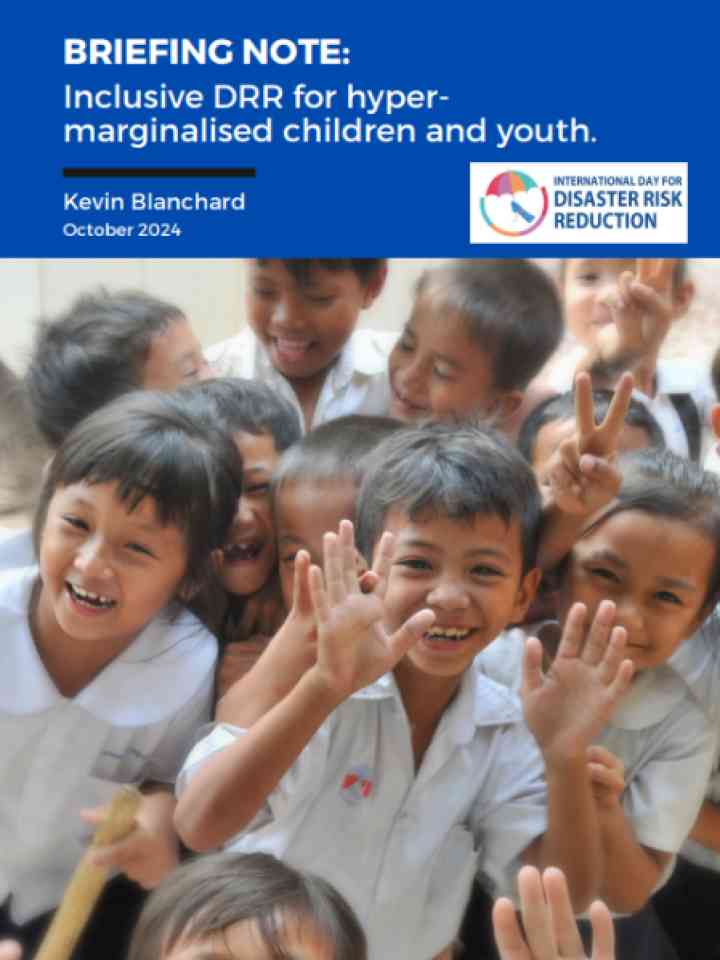
Download

Access Briefing note: Inclusive DRR for hyper-marginalised children and youth
Download a backup copy hosted by this site PDF, 3 MB English

We keep a copy of many documents to improve long-term access. Use this if the publisher’s site is slow or unavailable. Problems? Contact us.

Last checked: 10 October 2024

Editors' recommendations

  • Raising a resilient generation: Ensuring disaster preparedness for children
  • Engaging children & youth in disaster resilience and climate action
  • Mental health and our changing climate children and youth report 2023
  • 1 in 3 children exposed to severe water scarcity – UNICEF
  • Climate change contributes to violence against children – here’s how

Explore further

Themes Children and Youth Inclusion
Cover and source: DRR Dynamics
Number of pages
6 p.
Publication year
2024

Also featured on

PreventionWeb

Is this page useful?

Yes No
Report an issue on this page

Thank you. If you have 2 minutes, we would benefit from additional feedback (link opens in a new window).

The International Day for Disaster Risk Reduction was started in 1989, after a call by the United Nations General Assembly for a day to promote a global culture of risk-awareness and disaster reduction. Held every 13 October, the day celebrates how people and communities around the world are reducing their exposure to disasters and raising awareness about the importance of reining in the risks that they face.

Loading