IDDRR Logo
IDDRR - Main navigation
  • Learn
  • Act
  • Share on social
  •  Search
Menu

Innovative finance reshaping cyclone resilience and child-responsive disaster management in Madagascar

Source
United Nations Children's Fund (UNICEF)

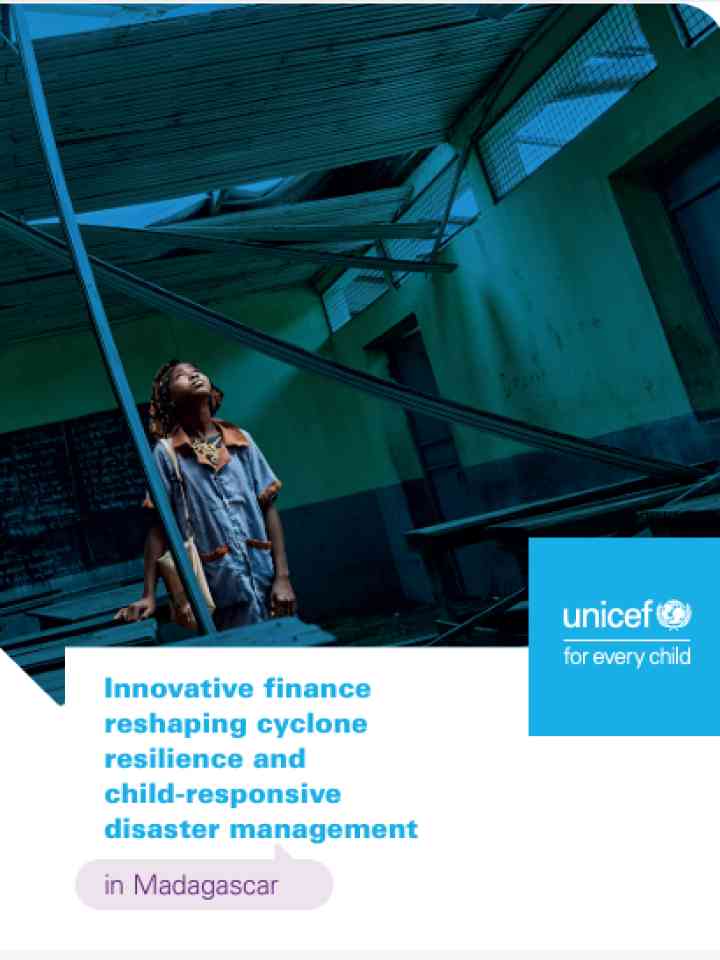
This case study shows how UNICEF, the Government of Madagascar and civil society are working together to pilot a ground-breaking, innovative finance solution that includes a child-responsive, parametric risk transfer product for tropical cyclones. The Today & Tomorrow approach aims to reduce child exposure and vulnerability to future shocks and hazards, engage children and young people in solutions and strengthen the essential social systems and services they rely on most.

UNICEF projects that Today & Tomorrow will protect 13.5 million children and families from current and future damage wrought by climate change. It plans to do so through the Humanitarian-Development-Peace Nexus (HDPN), a holistic approach to delivering better results for children by meeting short-term humanitarian goals, incorporating longer-term development actions to build resilience and minimizing conflict exacerbated by climate impacts. 1 billion # of children and young people at extremely high risk from climate impacts Madagascar's overall response to cyclones typically involves allocating funds to specific sectors for an average duration of six months. The Today and Tomorrow approach introduces a more flexible funding model to address multi-hazard risks.
Download

Innovative finance reshaping cyclone resilience and child-responsive disaster management in Madagascar PDF, 1.2 MB English

Last checked: 26 August 2024

Editors' recommendations

  • Falling Short: Addressing the climate finance gap for children
  • Anticipatory finance: An introductory guide
  • Children displaced in a changing climate
  • Potential for anticipatory action and disaster risk finance

Explore further

Hazards Cyclone, Hurricane and Typhoon
Themes Children and Youth Civil Society/NGOs Financing DRR
Country and region Madagascar
Cover
Number of pages
15 p.
Publication year
2024

Also featured on

PreventionWeb

Is this page useful?

Yes No
Report an issue on this page

Thank you. If you have 2 minutes, we would benefit from additional feedback (link opens in a new window).

The International Day for Disaster Risk Reduction was started in 1989, after a call by the United Nations General Assembly for a day to promote a global culture of risk-awareness and disaster reduction. Held every 13 October, the day celebrates how people and communities around the world are reducing their exposure to disasters and raising awareness about the importance of reining in the risks that they face.

Loading