Navigation loading…

Child centered early warning systems: Examples and good practice

Source
Save the Children International

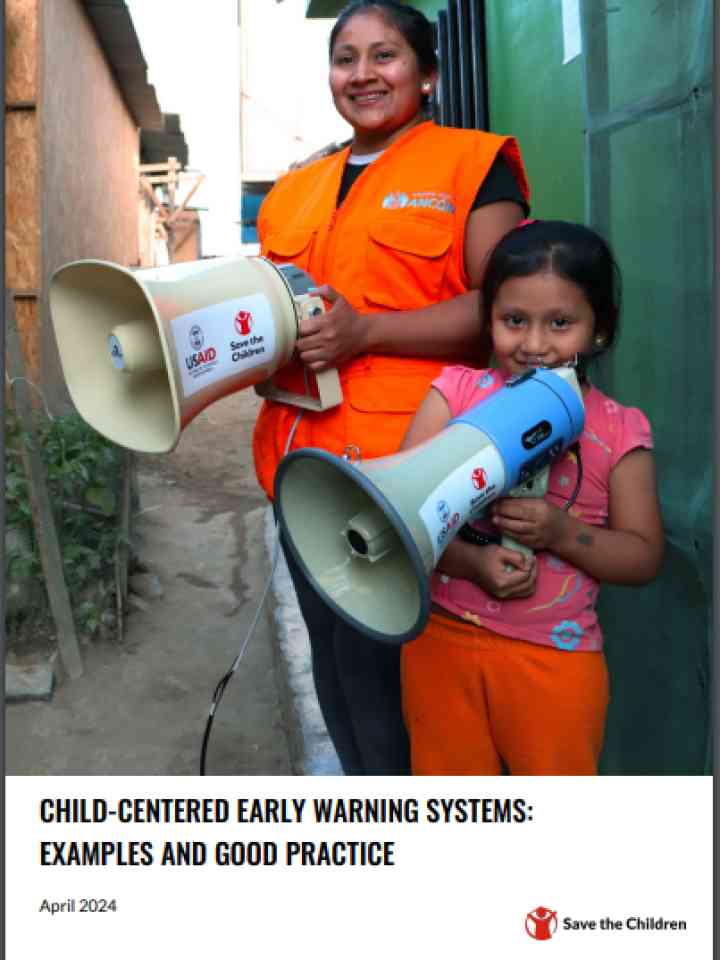
This document outlines examples of Save the Children’s experience with child-centred early warning systems, linked to the four pillars of the Early Warning for All initiative. It is intended as a starting point for discussion and further identification of good practice examples to ensure meaningful participation of children in development and implementation of early warning systems.

Seeing and treating children as passive victims or as a homogenous group misses the vast potential of their unique and collective capacities to drive solutions. Children, and particularly those from least developed countries and small island developing states, are often the most affected by and the least responsible for humanitarian disasters. In 2023, 29.8% of the world’s population of more than 8 billion people were under the age of 18. Six of the top ten countries with the highest vulnerability, however, are also among the ten countries with the highest child population, ranging between 46.64% (Democratic Republic of Congo) and 48.85% (Niger).
 

Download

Child centered early warning systems: Examples and good practice PDF, 13.2 MB English

Last checked: 5 April 2024

Editors' recommendations

  • Community-based early warning systems
  • Safer communities, safer children
  • Protecting children from heat stress: A technical note
  • Falling Short: AddFalling Short: Addressing the climate finance gap for childrenressing the climate finance gap for children

Explore further

Themes Children and Youth Early warning
Country and region United States of America Asia Europe
Cover
Number of pages
23 p.
Publication year
2024

Also featured on

PreventionWeb

Is this page useful?

Yes No
Report an issue on this page

Thank you. If you have 2 minutes, we would benefit from additional feedback (link opens in a new window).

The International Day for Disaster Risk Reduction was started in 1989, after a call by the United Nations General Assembly for a day to promote a global culture of risk-awareness and disaster reduction. Held every 13 October, the day celebrates how people and communities around the world are reducing their exposure to disasters and raising awareness about the importance of reining in the risks that they face.

Loading