
Resilience must be built before the first brick is laid: Lessons from Jamaica
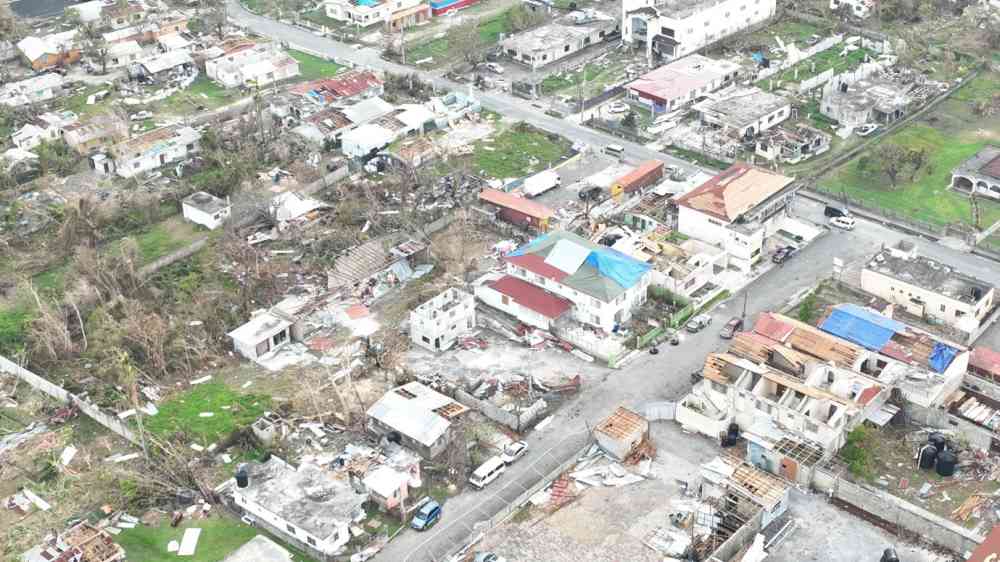
This aerial image shows the extent of the destruction to homes, roads and surrounding infrastructure in Western Jamaica following the passage of Hurricane Melissa in October 2025.
A home’s resilience is influenced not only by its construction, but also by the quality of the surrounding infrastructure, the reliability of essential services, and the risks considered when public investments are planned and appraised.
From a disaster risk reduction (DRR) perspective, these public investment decisions matter because they can help prevent new risks from being created or reduce existing risks. Public investment appraisal is therefore one point at which governments can translate DRR objectives into development decisions. This requires more than producing better climate-risk information; it requires institutional processes through which that information can inform decisions about which projects proceed, how they are designed and what measures are needed to manage risk.
Jamaica’s efforts to incorporate climate-risk assessment into its Public Investment Management System (PIMS) provide a practical example of this process. The experience illustrates how formal appraisal procedures and system-wide infrastructure risk analysis can complement one another—and why their significance ultimately depends on how they are used in investment decisions.
Embedding climate risk in public investment
Making climate risk routine requires more than access to climate information: it requires a recognized methodology, defined procedures, and institutional responsibilities for considering risk before investment decisions are made. The policy challenge, in other words, is to make climate risk a routine consideration in public investment decisions, rather than a concern addressed separately from project appraisal.
The United Nations Department of Economic and Social Affairs (UN DESA) Policy Brief No. 139 identifies weak institutional arrangements, limited capacity, and poor coordination as obstacles to risk-informed governance. It calls for sound policymaking, risk-management frameworks, and the knowledge and tools needed to prepare for future shocks. Jamaica's experience illustrates one practical way of addressing part of this challenge: embedding climate-risk assessment within an established public investment process.
For Jamaica, this is not simply a matter of improving investment procedures. In 2023, a one-off diagnostic assessment — the Climate Public Investment Management Assessment (C-PIMA) — was undertaken by the International Monetary Fund at the request of Jamaica's Ministry of Finance and the Public Service to examine how well the country's public investment management procedures incorporated climate considerations.
The C-PIMA highlighted the country’s increased exposure to climate-related hazards. Over the coming decades, Jamaica is expected to experience more heatwaves, more irregular rainfall that heightens the risk of drought and flooding, stronger tropical cyclones, and rising sea levels.
These hazards threaten public infrastructure and can disrupt the services and economic activities that depend on it, with consequences amplified by the concentration of infrastructure, population and tourism activity in coastal areas. The C-PIMA also found that, although Jamaica had progressed in climate policy and disaster-risk financing, project appraisal and selection lacked a standardised methodology for climate analysis, and it made eight high-priority recommendations, including developing climate-appraisal methods and applying them across financing sources.
With support from the Inter-American Development Bank (IADB), Rebel Group, an international advisory group specializing in infrastructure, public investment, and climate resilience, was retained in September 2023 to help the Public Investment Appraisal Branch of the Ministry of Finance and the Public Service develop a Climate Risk Assessment (CRA) methodology for the pre-investment appraisal phase of PIMS. In December 2023, Cabinet approved the methodology, and it was incorporated into the PIMS Handbook and Operational Guidelines through Circular No. 34.
Climate-risk screening now takes place at the project concept stage. Projects identified as having medium or high climate risk undergo further assessment to determine whether a detailed CRA or a simplified climate-risk management approach is appropriate. The value of this process, however, depends on the relevance of the evidence available and whether findings influence project decisions and implementation. Some of the evidence that matters most cannot be generated at the project level alone.
From project assessment to systemic-risk intelligence with J-SRAT
Project-level assessment is necessary but not sufficient. It can identify an asset's exposure and the measures needed to manage its risks, but it cannot, on its own, show how disruption to one asset may affect interconnected networks or where investment could deliver wider resilience benefits. A home may withstand a storm structurally yet remain vulnerable if access roads become impassable, electricity is interrupted or water services fail.
Jamaica’s Systemic Risk Assessment Tool (J-SRAT) adds this system-wide perspective. It was launched in May 2022 and developed by the University of Oxford with the Government of Jamaica, with support from the Coalition for Climate Resilient Investment and the UK Foreign, Commonwealth & Development Office. It identifies the country’s major infrastructure networks that are most vulnerable to climate risk, such as energy, water and transport
Using an input-output model of the Jamaican economy, the tool can simulate how asset failures propagate through interconnected networks and estimate wider economic impacts, including potential gross domestic product (GDP) losses.
In practice, the Minister of Water, Environment and Climate Change, Honourable Matthew Samuda, has confirmed that J-SRAT is being used to evaluate climate risks in potential investment areas, with climate risk also being considered in relevant development-approval and public-investment processes. The Government has also signaled its plans to make the tool available to developers once the relevant processes are finalized. These developments suggest pathways through which systemic-risk analysis may inform decisions; they should not be taken to mean that every appraisal uses the tool or that investment outcomes have already changed.
J-SRAT was already in development when the CRA methodology was approved, but the two instruments were designed for different but complementary purposes. The CRA methodology establishes how climate risk is considered during public investment appraisal; J-SRAT provides a broader view of infrastructure interdependencies, cascading consequences and potential system-wide impacts.
Building institutional capacity and ownership
Risk intelligence does not become useful simply because a methodology (CRA) or tool (J-SRAT) exists. Stakeholder engagement can bring local knowledge into analysis, test assumptions, identify data needs and build ownership among institutions expected to use the results.
In Jamaica, this was not a theoretical point. Jamaican ministries, agencies, data providers and other technical stakeholders contributed to J-SRAT's development.
In 2025, in my previous role with Jamaica’s Office of the Cabinet, I participated in workshops supporting Jamaican technical officers in the use of J-SRAT. These were not one-way training sessions. They gave officials the opportunity to work through practical problems in applying the tool and gave its developers direct insight into how it would be used and where it needed adjustment. That exchange reinforced a practical lesson: making a tool available does not, by itself, create institutional capability. Officials need to understand the tools’ assumptions and limitations, interpret its outputs and connect them to the decisions for which they are responsible. Reliable data, coordination and institutional ownership are therefore essential to making risk information useful—not simply additional features of the process.
The test is whether decisions change
Capacity is necessary, but it is not the end of the story. The real test comes at the decision point: does risk information influence project location or design, resilience measures, maintenance and investment priorities? Are responsibilities clear, and can implementation be monitored?
The CRA methodology and J-SRAT are important institutional steps, but they do not in themselves demonstrate that project choices have changed or that disaster losses have been reduced. Demonstrating this would require evidence of implementation and project-level outcomes: for example, whether risk analysis has changed designs, strengthened adaptation measures or influenced investment priorities.
Resilience starts much earlier
The 2026 IDDRR theme “Resilience Starts at Home” speaks to the safety of households and communities, but its implications reach further than the household. It also invites governments to look upstream at the policy choices and institutional processes that shape where people live and the services on which they depend.
Jamaica’s experience offers a broader lesson for governments facing complex, interconnected risks: climate-risk intelligence becomes consequential only when policy creates a reason to use it and governance provides a credible pathway into decisions. Mandatory climate-risk screening has now been incorporated into Jamaica’s Public Investment Management System by creating a formal entry point for risk information in project appraisal, although direct evidence that the CRA methodology has changed specific project designs is not yet publicly available. J-SRAT offers a clearer illustration: the tool had identified Savanna-la-Mar in Westmoreland as a climate-risk hotspot before Hurricane Melissa struck in 2025. The Minister of Water, Environment and Climate Change has also confirmed that it is now being used to evaluate climate risks in potential investment areas and development-approval processes. Together, these developments illustrate how risk information can inform decision-making, while underscoring the need to document whether and how it changes specific decisions and outcomes.
Progress is measured by whether these institutional arrangements change how government invests: where infrastructure is located, how projects are designed, how interconnected systems are considered, and whether risk-reduction measures are delivered and maintained. The ultimate measure is whether this translates into lower disaster risk and fewer losses over time.
Resilience therefore does not begin when a house is completed. It begins much earlier in the decisions that shape development and determine how public resources are used to manage risk.

Kerry-Ann Morris works at the intersection of evidence, policy and practice, with 19 years of experience across government, scientific institutions and international networks. A former Senior Policy Analyst with Jamaica's Office of the Cabinet, she has worked across policy, governance and disaster risk reduction, and is currently the Science and Communication Officer for the Integrated Research on Disaster Risk (IRDR) programme in China. In her previous policy role, she participated in workshops to support technical officers in the use of the Jamaica Systemic Risk Assessment Tool (J-SRAT). Visit her LinkedIn page for more information.