
Resilience starts at home, and travels outwards to transform societies
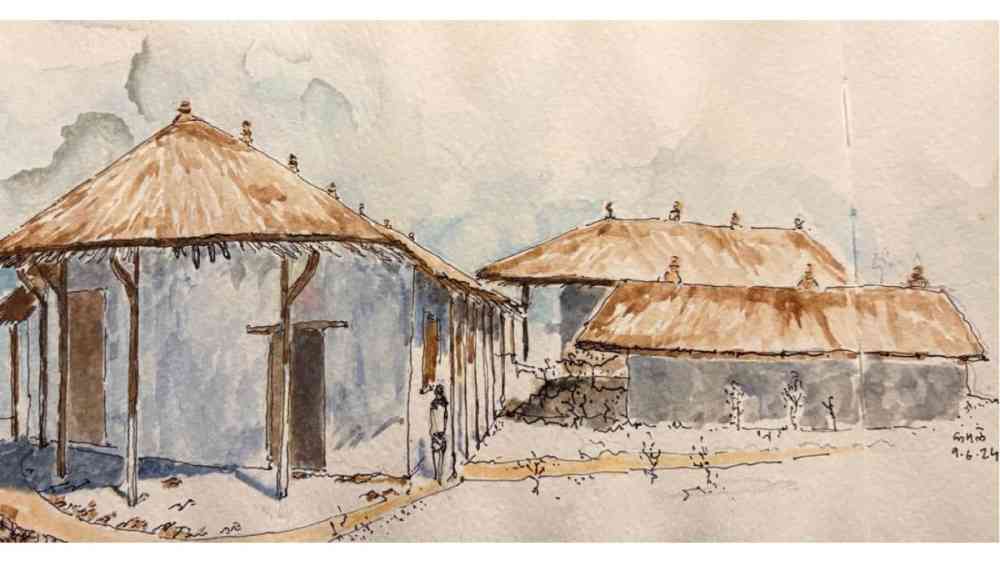
In 2003, when I visited Bam in the aftermath of Iran’s devastating earthquake, I met three men who had endured great hardship, including the loss of members of their families. Just three days after the disaster, they were already clearing the rubble where their family home had stood, making space to build a temporary shelter. I have never forgotten them.
Over the years, whenever I have visited a disaster-affected community, I have been struck by how quickly families begin to shape or reshape their homes. Whether it is removing the rubble of a destroyed house to make space for a makeshift home, or setting up a home in and around a temporary tent, people’s agency finds its clearest expression in how they shape their own habitat.
In my view, this agency of the people – not only after a disaster but also before one – is the most under-recognised, undervalued and under-supported aspect of our work on disaster risk reduction.
This is why we chose “Resilience starts at home” as the theme for the 2026 International Day on Disaster Risk Reduction.
A home is where people’s choices meet public policy, and where the consequences of that policy are experienced most directly.
Eleven years after the adoption of the Sendai Framework, we can take satisfaction from a significant reduction in disaster deaths, largely a result of better planning, stronger infrastructure and more effective early warning systems. Yet homes continue to be destroyed, and ever more people are getting affected by disasters – they lose their houses, their livelihoods, their income and access to social services. In most disasters, housing accounts for at least half of the total damage.
If we want to accelerate the achievement of the other targets of Sendai Framework, we must make disaster risk reduction a mass movement. And that movement starts at home.
Millions of everyday decisions shape housing risk
Housing resilience is, by its nature, a societal issue. Governments can introduce building regulations, land-use policies and resilience programmes, and these remain essential. Housing risk is also shaped by millions of everyday decisions made by families, builders, developers and financial institutions.
We cannot build a resilient housing sector one government project at a time. The task is to create the conditions in which these millions of individual decisions, supported by effective public policy, add up to a more resilient society.
When resilience starts at home, societal transformation happens from the inside out – bottom-up, and hence more sustainable. Much of this lies in decisions families already make: where to build, buy or rent; how to extend or improve a home; and how to maintain it over the years. The opportunity lies in changing how these existing decisions and investments are made.
When each family knows the risks it faces and what to do about them – whether by fixing cupboards to walls in an earthquake zone, or keeping storm water drains around their homes clear ahead of the rains, or properly tying down roofs before cyclone season – these small actions begin to add up to resilience at scale.
Homes are also where conversations happen. Around the kitchen table, children ask questions, parents and grandparents share what they remember of past floods or earthquakes, and families agree where they would meet if they had to leave in a hurry. It is in these conversations that resilience takes seed in the mind, and children carry what they learn there into adult life.
Public policy expands people’s capacity to act
Resilience at home calls for care. Many people lack the means or the freedom to choose where they live or how their homes are built. Vulnerability is unevenly distributed – across income, gender, age, disability and tenure – and so is the capacity to act. This is precisely why government action remains essential.
The role of public policy extends beyond delivering resilience directly. It is to empower families, strengthen their agency, recognise and address differential vulnerabilities, and make resilient choices possible and attractive across society.
A whole-of-society approach should expand people’s capacity to act, with the responsibility for managing disaster risk remaining shared. The private sector, civil society, academia and financial institutions each have a part to play in supporting people-led, people-centred action.
An informed citizenry creates a social demand for resilience
Countries that have made real progress in reducing risk – such as Japan, New Zealand, Chile – have done so in large part because citizens and families are active participants in building resilience.
People who understand the risks their homes face are also aware of how local by-laws and the actions of private developers affect their homes’ resilience.
Such an informed citizenry creates a social demand for resilience and asks tough questions of local governments, private developers and service providers. In this way, protecting the home becomes a foundation for stronger public accountability and better governance.
Housing solutions are ready vehicles for resilience
Going beyond individual families, a social demand for resilience has the potential to transform the entire housing sector. Adequate, affordable housing is one of the major global issues of our time. Even though the issue has gained political salience in advanced economies and developing countries alike, closing the housing gap has proven increasingly difficult.
Governments and the private sector across the world are working assiduously to find solutions. Many of these – better land-use management, innovative financing, regulating unwarranted speculation, increased technical and governance capacities, innovation in service provision – are ready vehicles for pursuing resilience too.
Housing that is not resilient cannot be described as adequate housing, and its apparent affordability lasts only until the next disaster.
Families shape their own recovery
Finally, there is the issue of housing sector recovery after a disaster. Social demand for resilience can also transform the way it takes place.
Recovery takes hold once homes begin to take shape again, and the men I met in Bam showed how quickly families start that process themselves.
Government-led recovery and owner-driven rebuilding work best when they move in step – public support providing finance, technical guidance and safer standards, and families shaping homes that meet their own needs. We have accumulated decades of experience on what works and what does not in terms of “building back better”, yet we tend to repeat the same mistakes.
Resilience starts at home, and it travels outwards – to communities, local governments, nations and the international system.
This International Day for Disaster Risk Reduction, I invite every reader, however accomplished in this field, to begin with their own home and family: to have that conversation around the table, to think through what a warning would mean for the people they love, and to make one small change that leaves their home safer.
A home that withstands a hazard keeps a family whole – and that is really what all our work is for.