UNDRR Logo
Navigation loading…
  • Add
  • A threat to progress: Confronting the effects of climate change on child health and well-being

    Source
    United Nations Children's Fund (UNICEF)

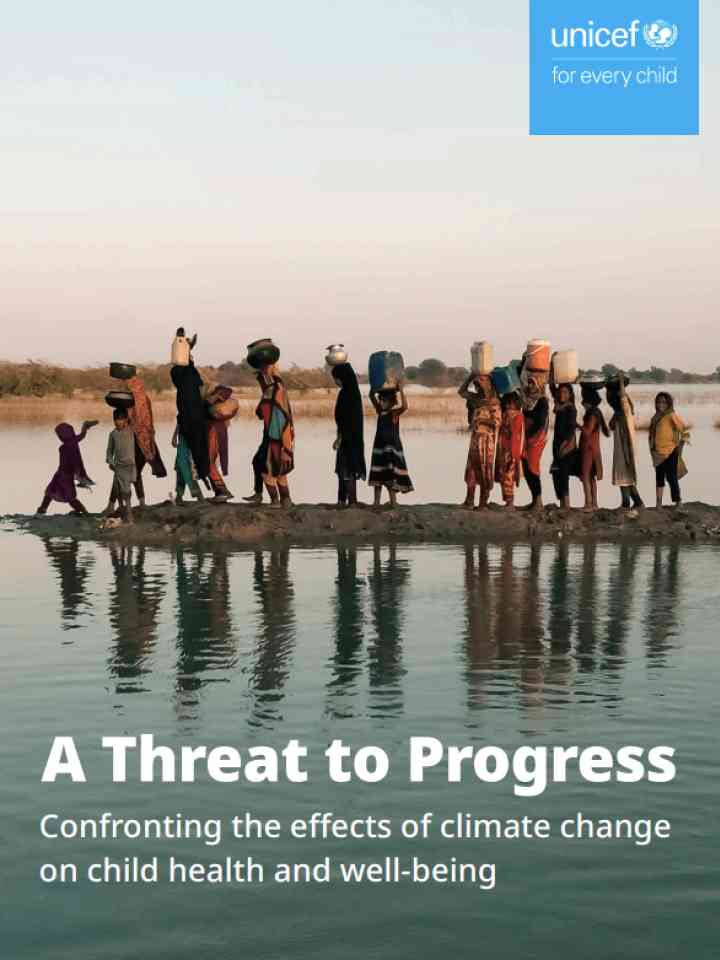
    This report aims to provide a comprehensive 'stocktake' of the impacts of climate change on children across six major hazards that impact their health and well-being: extreme heat, droughts, wildfires, floods and storms, air pollution and ecosystem changes. Climate change is impacting almost every aspect of child health and well-being from pregnancy to adolescence. Children are disproportionately affected by climate change because they are uniquely vulnerable to environmental hazards compared to adults. While the evidence on the impact of climate change on children's health and well-being is growing, research often focuses on the effects of individual hazards.

    This report makes three recommendations with accompanying specific actions:

    • Reduce emissions to meet 1.5°C degree threshold ensuring the best interest of the child
    • Protect children from the impact of climate change
    • Prioritize child health and well-being in climate policy, investment and action

    Download

    Access A threat to progress: Confronting the effects of climate change on child health and well-being
    Download a backup copy hosted by this site PDF, 2.3 MB English

    We keep a copy of many documents to improve long-term access. Use this if the publisher’s site is slow or unavailable. Problems? Contact us.

    Access Des progrès menacés: Les conséquences des changements climatiques sur la santé et le bien-être des enfants (French)
    Download a backup copy hosted by this site PDF, 2.4 MB French

    We keep a copy of many documents to improve long-term access. Use this if the publisher’s site is slow or unavailable. Problems? Contact us.

    Access Una amenaza para el progreso: Cómo abordar los efectos del cambio climático sobre la salud y el bienestar de la infancia (Spanish)
    Download a backup copy hosted by this site PDF, 2.4 MB Spanish

    We keep a copy of many documents to improve long-term access. Use this if the publisher’s site is slow or unavailable. Problems? Contact us.

    Access هتديد للتقدم مواجهة آثار تغير املناخ على صحة األطفال وعافيتهم (Arabic)
    Download a backup copy hosted by this site PDF, 2.7 MB Arabic

    We keep a copy of many documents to improve long-term access. Use this if the publisher’s site is slow or unavailable. Problems? Contact us.

    Access Key messages from the report A Threat to Progress: Confronting the effects of climate change on child health and well-being
    Download a backup copy hosted by this site PDF, 0.4 MB English

    We keep a copy of many documents to improve long-term access. Use this if the publisher’s site is slow or unavailable. Problems? Contact us.

    Last checked: 30 July 2024

    Editors' recommendations

    • Climate change contributes to violence against children – here’s how
    • Learning to Live in a Changing Climate: The Impact of Climate Change on Children in Bangladesh
    • Children risk early marriage: climate change one of the factors
    • Climate change is an urgent threat to pregnant women and children

    Explore further

    Themes Children and Youth Climate change Health and health facilities
    Cover-UNICEF
    ISBN/ISSN/DOI
    978-92-806-5579-7
    Number of pages
    85 p.
    Publication year
    2024

    Also featured on

    PreventionWeb

    Is this page useful?

    Yes No
    Report an issue on this page

    Thank you. If you have 2 minutes, we would benefit from additional feedback (link opens in a new window).

    The International Day for Disaster Risk Reduction was started in 1989, after a call by the United Nations General Assembly for a day to promote a global culture of risk-awareness and disaster reduction. Held every 13 October, the day celebrates how people and communities around the world are reducing their exposure to disasters and raising awareness about the importance of reining in the risks that they face.

    Loading